We Love It's Guide to…
Design physics-driven rockets, plan staged launches, master orbital travel, and land payloads across a 2D solar-system sandbox.
Released 17 Feb 2022
Assemble Multi-Stage Rockets
Plan Orbital Flights
Land on Other Worlds
In Spaceflight Simulator, you will get to build your rockets, plan launches and flights, attempt landings, deploy payloads and explore new worlds.
Developed by Team Curiosity ✦ · Published by Team Curiosity ✦
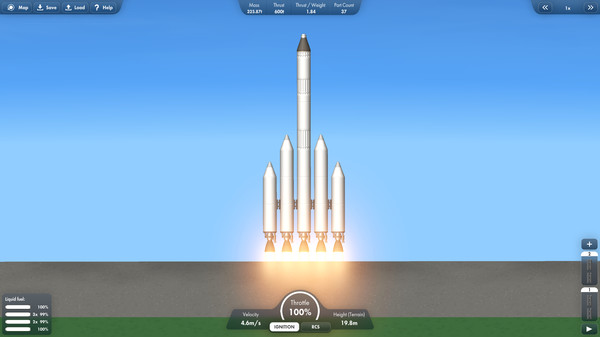
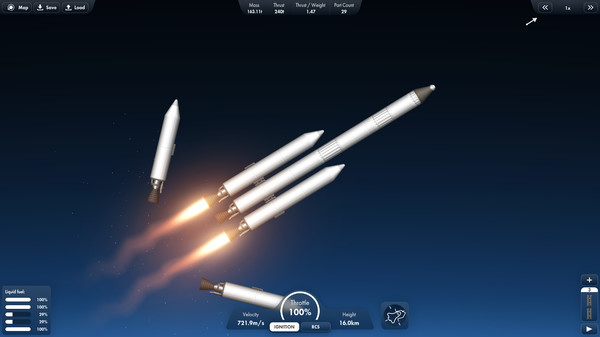
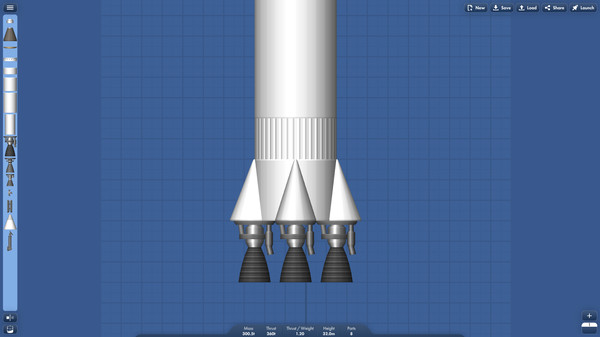
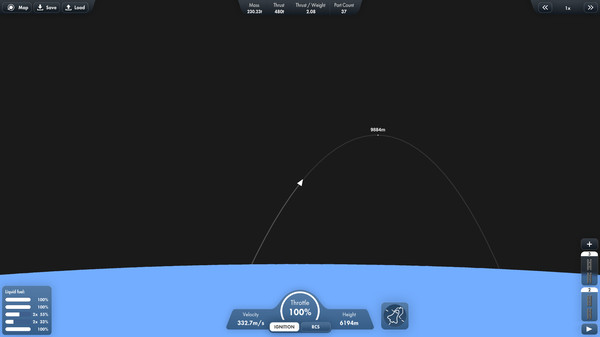
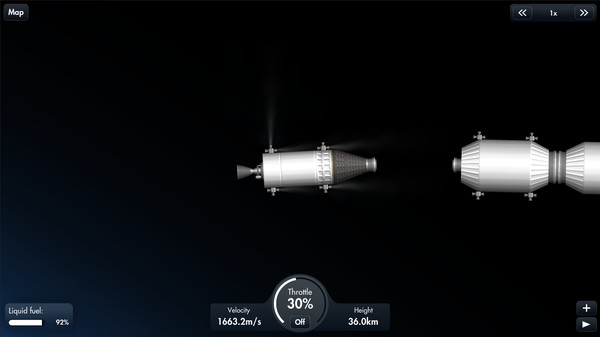
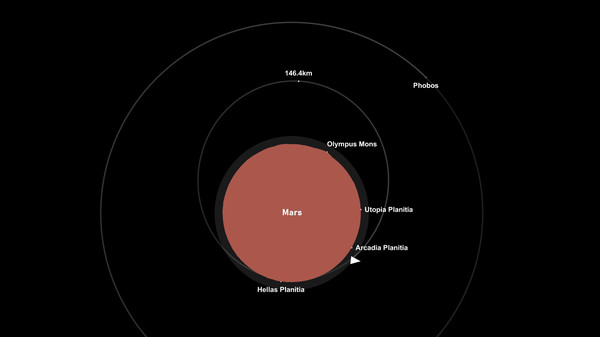
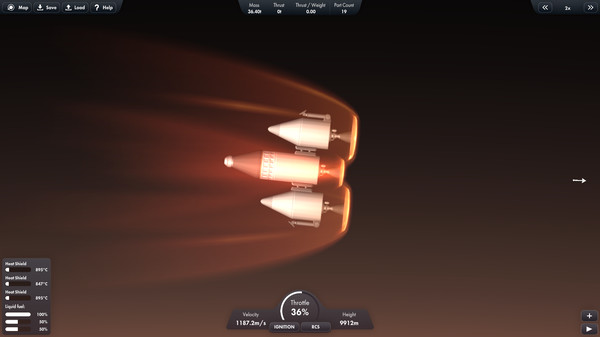
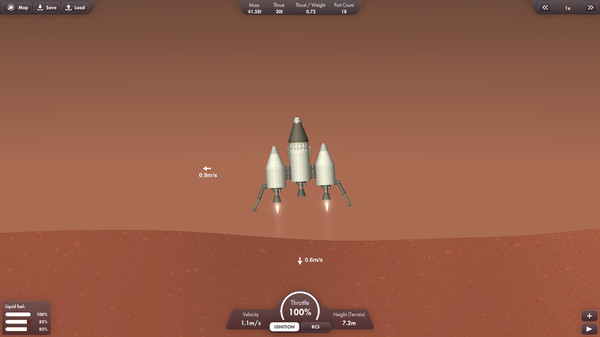
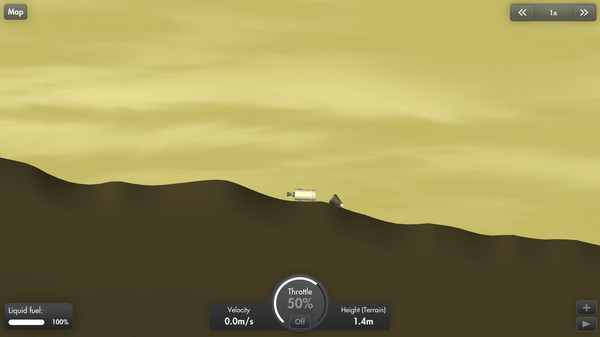


Take charge of a space program in a 2D sandbox, designing spacecraft and flying missions from launch through orbital travel and landing. Set your own goals or work toward challenges such as reaching orbit and visiting other worlds.
Build rockets from components with different masses, aerodynamic properties, thrust, and fuel use. Choose engines and tanks, arrange stages and separations, then plan burns and trajectories to carry your payload where it needs to go.
Launch satellites, probes, landers, and rovers, and travel among planets and moons with differing gravity, atmospheres, and terrain. The persistent world lets you continue missions and build a presence in space, including stations assembled from multiple launches.
In the supplied reviews, players often enjoy designing rockets, learning orbital flight through experimentation, and setting their own exploration goals. The building-and-testing loop is frequently described as approachable at first but rewarding to master, while planetary landings and constructing stations, rovers, or satellites give players longer-term projects. Some reviewers also value the game as a hands-on way to explore basic spaceflight concepts.
Note: STEAM version already includes Expansions/Packs/Bundle.
EXPLORE SPACE
Be in command of your own space program, from rocket design to interplanetary travel and achieve your dream of cruising through the cosmos in your custom spacecraft.
In Spaceflight Simulator, you will get to engineer your rockets, plan launches and flights, attempt landings, deploy payloads and explore new worlds.
EASY-TO-PICK UP, HARD-TO-MASTER
You could be launching your first rocket within minutes, but landing it in one piece might be another story!
With so many parts to pick from, you will learn through trial and error how to build spacecrafts best adapted to each of your missions. You will have to master navigating through the Solar system and landing your vehicle on all the planets and moons, each with their own atmospheric and terrain conditions.
REAL-WORD PHYSICS
During the design phase, you will get to assemble your own launch vehicle from a wide variety of components and pair them with a multitude of engines, all modeled after their real-world counterparts. Each part possesses its own technical specifications (mass, aerodynamics, etc.) which will affect your rocket's behavior.
All engines accurately model thrust and fuel consumption affecting how much payload you'll be able to carry safely. You'll be able to create multistage vehicles, control how they separate and when secondary burn occurs in order to achieve the optimal trajectory.
BUILD YOUR WORLD
Fuel your ambitions, launch satellites, build exploration rovers, space stations, multiple rockets into space. Your world is persistent and only your imagination is your limit.
Conquer the harsh conditions of the Solar system, travel long distances and build your presence in space throughout multiple missions.
PARTS, PARTS, PARTS
Each part is highly detailed and serves a particular purpose. They are all based on their real-world equivalent and allow you to recreate your favorite historical rocket.
● Fuel tanks (20 sizes and configurations)
● Engines and thrusters (6 propulsion systems and a reaction control system)
● Aerodynamics (13 fairings with many nose and side cones)
● Capsules, probes, payload systems, separators and docking ports
● Landing systems (legs, parachutes, wheels)
● Skins (to personalize your rocket)
WHAT TO EXPLORE
Each destination is modeled accurately in terms of gravity pull and atmospheric conditions, offering a challenging landing experience every time.
● Earth, your starting point
● The Moon, Earth's celestial companion
● Mercury, the smallest planet of our solar system and the closest to the Sun
● Venus, Earth's inside neighbour with an extremely dense and hot atmosphere
● Mars, the red planet with a thin atmosphere
● Phobos, Mars' inner moon, with rough terrain and low gravity
● Deimos, Mars' outer moon, with an extremely low gravity and a smooth surface
● Jupiter, the gas giant with its thick atmosphere
● Io, Europa, Ganymede, and Callisto. Each with their how terrain and landing difficulty
| Platforms | Windows, macOS |
|---|---|
| Age ratings |
|
| Controller required | No |